
Indoor Air Quality Testing in New Jersey
Start with a question the assessment can answer
Discuss the rooms, conditions, and concerns behind your request. Agree on a useful assessment and any targeted testing before deciding what the home needs next.
Homes & light commercial spaces across seven NJ counties.
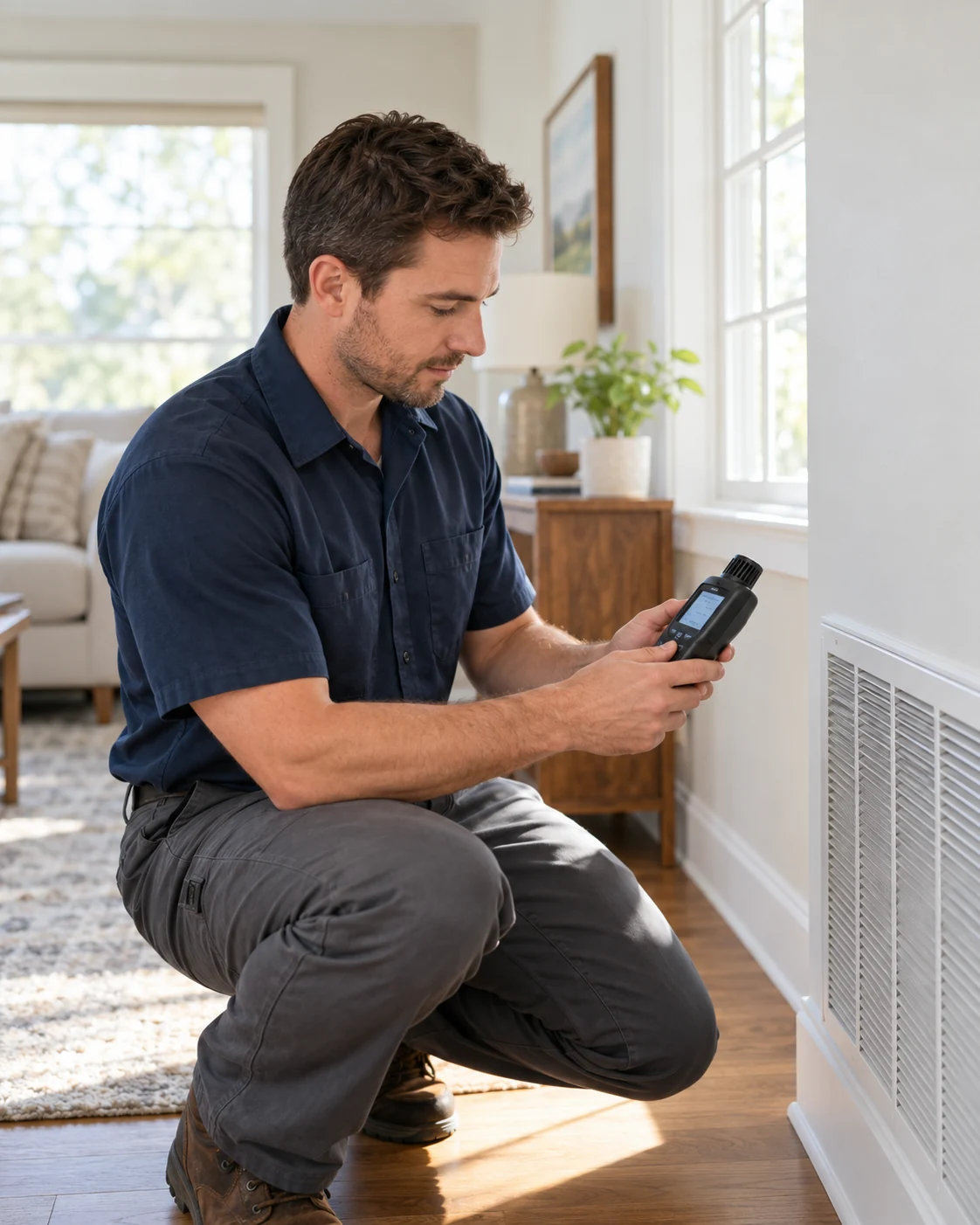
A useful result begins with a defined scope
Recurring odors, a damp room, or questions about filtration do not all call for the same test. We begin with what you notice, when it occurs, recent changes in the home, and the way the HVAC system is operating.
From there, we discuss which observations or measurements are appropriate and confirm the scope before work begins. Any testing should be tied to a specific concern, with its limits explained. Specialized sampling or evaluation may require a separate qualified provider.
Questions to bring to an air-quality assessment
- A room repeatedly feels damp or stuffy.
- You want to understand unusual indoor humidity readings.
- Air-quality concerns began after a change in the home.
- You need help deciding which concern should be investigated first.
What the work
looks like
A clear look at your system, a conversation about the options, and a plan for the work ahead.
Document the concern
We discuss affected spaces, timing, recent work, and any readings or observations you have already collected.
Agree on the assessment
Confirm the HVAC checks, measurements, or targeted testing appropriate to the question, along with any specialist work needed.
Review the findings
We explain what the agreed assessment shows, what remains uncertain, and practical options for the next step.
A few things
you may be asking
Is there one test that checks everything in the air?
No. Different concerns require different methods, and conditions change over time. The assessment should start with a clear question rather than a promise to detect every possible pollutant.
Does this automatically include mold, radon, or asbestos testing?
No. Ask about the exact scope when you contact us. These concerns can require specific sampling methods and separately qualified professionals; they are not implied by a general HVAC assessment.
Can a result certify that the home’s air is completely safe?
No. A measurement describes particular conditions and has limits. We discuss the findings in context; an air-quality assessment is not a universal safety certification or a medical diagnosis.
Here in New Jersey
Atlantic Air serves homes and light commercial spaces across these seven counties. Share your town when you reach out so we can confirm your location and arrange a visit.